Business Coaching for Small Business Owners
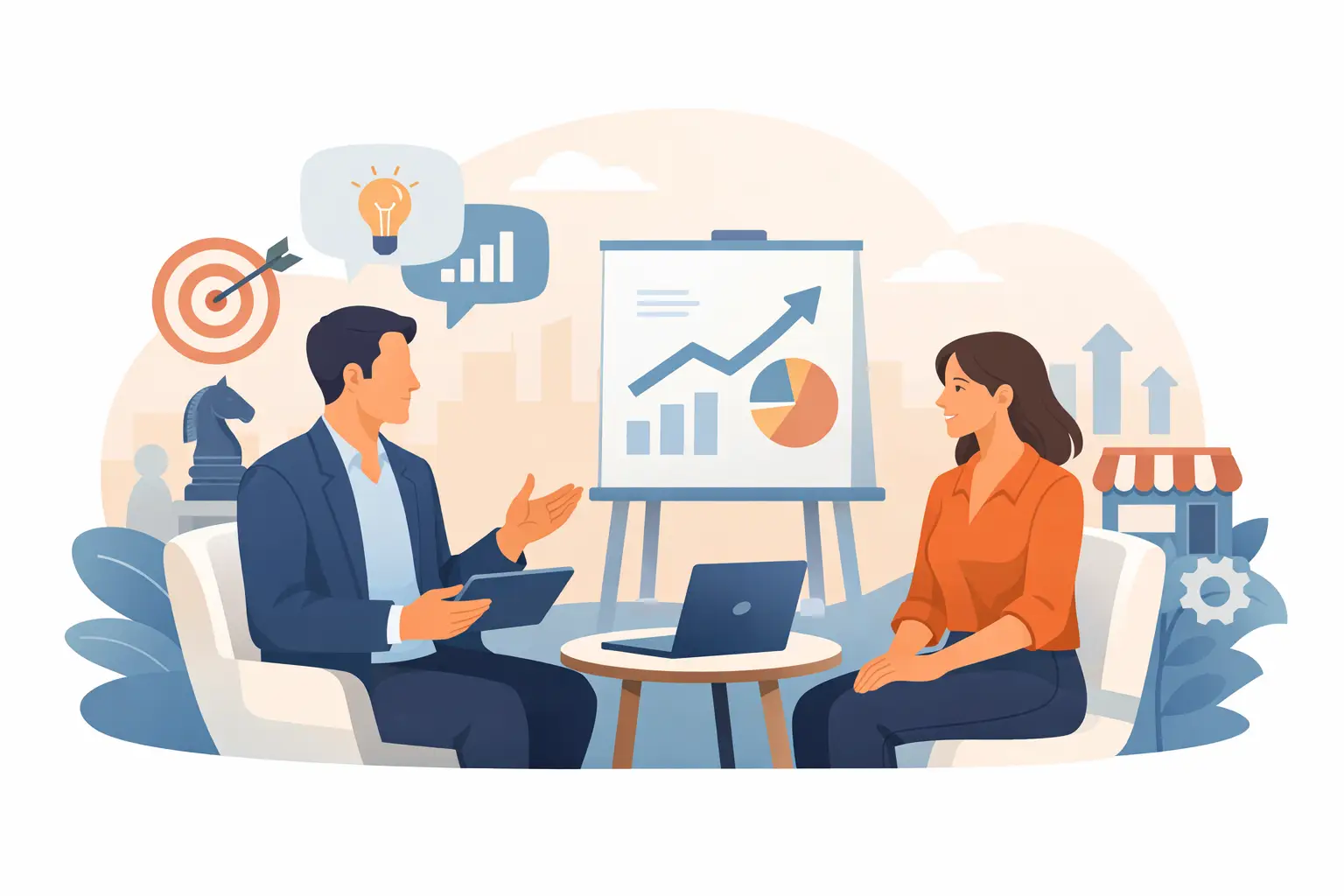
Growth rarely stalls because the owner lacks ambition. More often, it stalls because the business has outgrown instinct. That is where business coaching for small business owners becomes valuable - not as a motivational extra, but as a practical way to regain control, make better decisions and turn effort into measurable progress.
For many SME owners, the problem is not a shortage of work. It is too much of the wrong kind. Too much firefighting. Too many decisions being made in the moment. Too much dependence on the owner to drive sales, solve issues and keep standards high. The business may be trading well enough on paper, but underneath that, profit is inconsistent, the team needs stronger direction and growth feels harder than it should.
A good coach helps you step out of that cycle. Not by handing over generic advice, but by creating structure, accountability and sharper commercial focus. That matters if you want a business that scales with discipline rather than one that simply gets busier.
What business coaching for small business owners actually means
There is often confusion around coaching because the term is used loosely. In a serious SME context, business coaching is not therapy, abstract mentoring or motivational speaking. It is a focused process that helps the owner improve performance, make better strategic choices and execute consistently.
That usually means working on the core drivers of business growth: sales, margins, leadership, time, systems and accountability. It also means challenging assumptions. Many owner-managed businesses hit a ceiling because the habits that got them to one level are not enough to reach the next. A coach brings perspective, but more importantly, they help convert perspective into action.
The best coaching relationships are commercially grounded. They look hard at numbers, priorities and bottlenecks. They identify where the business is leaking time, money or momentum. Then they build a plan that is realistic for the size and stage of the company.
Why established SMEs reach a plateau
Most small business owners are highly capable in their own field. They know their market, their customers and their product or service. But running an established business requires a wider skill set than technical expertise alone.
At a certain point, growth starts to expose weaknesses in structure. Sales may depend too heavily on referrals. Pricing may not reflect value. Staff may be busy but not fully accountable. The owner may still be acting as sales director, operations manager and chief problem-solver all at once. That can work for a while, but it rarely creates stable scale.
This is where external coaching earns its place. An experienced coach sees patterns that owners often miss because they are too close to the day-to-day. They ask harder questions, spot what is being avoided and keep the focus on what will actually move the business forward.
It is not about criticism. It is about creating a clearer operating rhythm so the business can perform at a higher level.
The real benefits of business coaching for small business owners
The obvious benefit is growth, but that word can be misleading if it is not defined properly. For some businesses, growth means higher turnover. For others, it means better margins, stronger leadership, improved cash flow or less dependence on the owner. In many cases, it means all of those things together.
One of the strongest outcomes of coaching is clarity. When owners are pulled in ten directions, they often confuse activity with progress. A coach helps narrow the focus to the priorities that matter most. That alone can improve decision-making and reduce wasted effort.
Another major benefit is accountability. Business owners are used to being accountable to clients, staff and suppliers, but often not to anyone strategic. That gap matters. Without external challenge, it is easy to delay decisions, tolerate underperformance or stay too long in reactive mode. Coaching creates a regular point of review, which tends to improve follow-through.
There is also the leadership benefit. As businesses grow, the owner's role must change. What worked when the team was small often becomes a constraint later on. Coaching helps owners lead with more intention, delegate more effectively and build a business that does not rely on their constant intervention.
What good coaching looks like in practice
Strong coaching is practical. It should not leave you with a notebook full of ideas and no change in the business. It should lead to better habits, better conversations and better commercial outcomes.
A useful coaching process often begins with diagnosis. What is the current position of the business? Where is growth being slowed? Which numbers matter most? What is working, and what is only being tolerated? From there, priorities can be set with more precision.
For one business, the immediate issue may be weak conversion rates. For another, it may be poor team accountability or a lack of financial visibility. Some need a clearer growth strategy. Others need tighter execution rather than a new plan. This is why cookie-cutter advice rarely helps established SMEs for long.
The most effective coaches combine challenge with support. They do not simply cheerlead. They push for action, hold standards and keep attention on results. At the same time, they understand the pressure that comes with leading a growing business and help owners think more clearly under that pressure.
When coaching is worth the investment
Not every business is ready for coaching at the same moment. Timing matters.
If an owner wants quick fixes without making changes, coaching will disappoint. If the business has no appetite for accountability, it will struggle to get value. But when there is genuine ambition and willingness to act, coaching can have a strong commercial return.
It tends to be especially valuable when a business is stuck between stages. That might be after initial success, when growth has slowed. It might be during team expansion, when leadership strain starts to show. Or it might be when turnover is rising but profitability is not keeping pace. These are common moments where business coaching for small business owners can make a measurable difference.
The trade-off is simple: coaching requires time, honesty and commitment. It asks owners to look directly at what is not working and address it properly. For serious business leaders, that is usually a worthwhile exchange.
Choosing the right business coach
A credible coach should bring more than enthusiasm. They should understand SME growth, commercial performance and the realities of owner-managed businesses. Experience matters. Method matters. So does the ability to tailor support rather than force every business through the same script.
It is worth asking how the coach works in practice. How do they measure progress? What areas do they focus on? How much of their approach is strategic, and how much is execution-focused? The answers tell you a great deal.
Chemistry matters too, but not in the soft sense of simply liking the person. The right fit means the coach can challenge you effectively, earn your trust and understand what you are trying to build. You need someone who can spot blind spots, but also help turn good intentions into disciplined action.
For many SMEs in Staffordshire, the West Midlands and across the UK, that combination of accountability and practical growth support is exactly what makes coaching valuable. Businesses do not need more noise. They need clear thinking, strong execution and the confidence to make better decisions faster. That is the space where firms such as GSC Strategies can add real value.
Coaching is not about dependency
One concern some owners have is whether coaching creates reliance. In good coaching, the opposite happens. The aim is not to make the owner dependent on advice. The aim is to improve capability, judgement and consistency so the business becomes stronger in its own right.
That might mean building better management routines, improving financial discipline, setting clearer targets or strengthening the leadership team. Over time, the owner should become more strategic, not more reliant. The business should become more resilient, not more fragile.
That is a key distinction. Coaching should raise standards across the business, not just create a temporary burst of motivation.
Ambitious businesses rarely move forward by chance. They grow because someone makes the time to think clearly, act decisively and stay accountable to the right priorities. If your business feels busy but not fully in control, that is often the signal that another level is possible - with the right challenge, the right structure and the right support.